

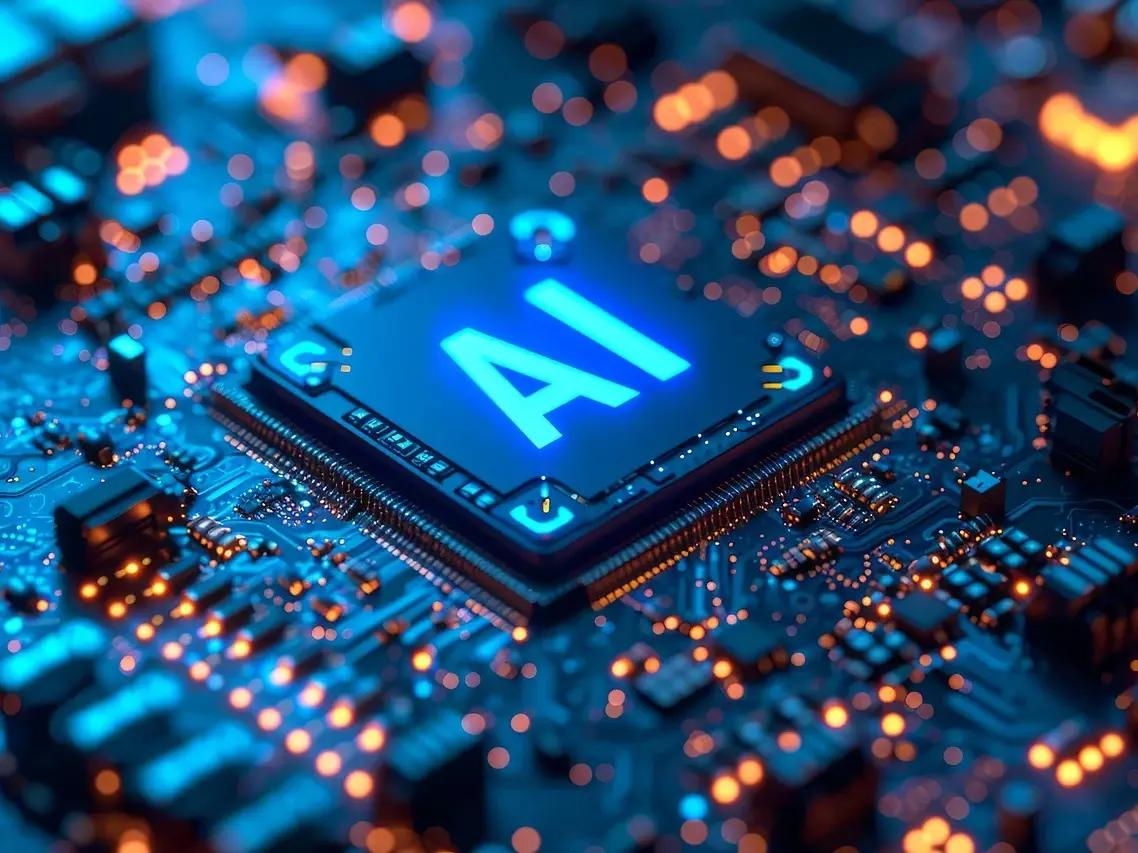
&imwidth=800&imheight=600&format=webp&quality=medium "Big tech will spend $740 billion on AI this year! Up 77% in twelve months")
Four companies will spend roughly three-quarters of a trillion dollars on artificial intelligence infrastructure this year. The debate is no longer whether that is a lot of money. It is whether the returns have started arriving.
The Number
Combined 2026 capital expenditure from Amazon, Alphabet, Meta and Microsoft is tracking toward approximately $740 billion — an increase of roughly 77 per cent on the $410 billion the same four companies spent in 2025.
The breakdown: Amazon leads at around $200 billion. Alphabet has guided to $195–205 billion. Meta has guided to $125–145 billion. Microsoft sits at approximately $120 billion.
To put $740 billion in perspective, it exceeds the annual gross domestic product of most countries and represents, in a single year and from four companies, one of the largest concentrated capital deployments in the history of private enterprise.
The Case For Alarm
Trending Stories
&imwidth=180&imheight=135&format=webp&quality=medium)
'Nidal Hasan's firing-squad execution to be livestreamed', says Pentagon; first US military execution since 1961
&imwidth=180&imheight=135&format=webp&quality=medium)
Trump's naked 23-karat gold statue unveiled near European Parliament
&imwidth=180&imheight=135&format=webp&quality=medium)
Musk doubles down on Starlink India licence allegations; Rahul Gandhi says ‘wait till...’
&imwidth=180&imheight=135&format=webp&quality=medium)
Thai Actors Fourth Nattawat, Gemini Norawit face racism accusations from Indian fans over viral Bollywood act
&imwidth=180&imheight=135&format=webp&quality=medium)
Nigeria govt rolls out 30-day NNPC petrol discount, insists it is not a subsidy
&im=FitAndFill=(700,400)&imwidth=180&imheight=135&format=webp&quality=medium)
Fastest-growing Asian economies in 2026: Who tops the chart? Where does India rank?
&imwidth=180&imheight=135&format=webp&quality=medium)
24-year-old Sri Lankan man sentenced to death for blasphemy in Saudi Arabia
&imwidth=180&imheight=135&format=webp&quality=medium)
A Love Other Than Yours: The temptation to cheat and what pushes people over the edge
&imwidth=180&imheight=135&format=webp&quality=medium)
Russia president Putin promises to 'do everything' to help settle Middle East conflict as US-Iran negotiations stall
&imwidth=180&imheight=135&format=webp&quality=medium)
‘Wait till you discover the other guy’: Rahul Gandhi takes a swipe as Musk's 'Ambani real boss of India' remark triggers X subscription cancellations
&imwidth=180&imheight=135&format=webp&quality=medium)
BTS agency HYBE announces first-ever Weverse Con Festival in India
&imwidth=180&imheight=135&format=webp&quality=medium)
Trump has a new 'enemy': Anyone who calls it 'artificial intelligence'. Here's what we wants instead
&imwidth=180&imheight=135&format=webp&quality=medium)
India at UN: Pak allows terror groups to operate from its soil
&imwidth=180&imheight=135&format=webp&quality=medium)
Air India, Air India Express increase fuel surcharge on domestic, international flights amid rising ATF costs
&imwidth=180&imheight=135&format=webp&quality=medium)
'Something truly catastrophic will happen': Former OpenAI researchers sound the alarm, claim they were fired for prioritising AI safety
&im=FitAndFill=(700,400)&imwidth=180&imheight=135&format=webp&quality=medium)
From Kramatorsk buses to Yandex fire: Russia-Ukraine war in the last 48 hours
&imwidth=180&imheight=135&format=webp&quality=medium)
Pakistan denies reports of PAF jets being used in attacks against Iran-backed Houthis in Yemen
&imwidth=180&imheight=135&format=webp&quality=medium)
New York ICE shooting sparks protests as Mamdani to call on Trump to halt ICE operations
&imwidth=180&imheight=135&format=webp&quality=medium)
Atlantic hurricane Isaias could make landfall as a strong Category 2 storm, tornado warnings issued
&imwidth=180&imheight=135&format=webp&quality=medium)
Nana Patekar's #MeToo controversy: From Tanushree Dutta’s allegations to court ruling
&imwidth=180&imheight=135&format=webp&quality=medium)
Who is Nana Patekar's wife Neelakanti? The bank officer who earned Rs 2,500 when he earned Rs 50
&imwidth=180&imheight=135&format=webp&quality=medium)
KATSEYE’s Sophia Laforteza to return in 2027 after hiatus, agency issues statement
&imwidth=180&imheight=135&format=webp&quality=medium)
French students light European bonfire, protests erupt in Belgium, Italy & Greece | Gravitas
&imwidth=180&imheight=135&format=webp&quality=medium)
France student protests: Over 500 arrested, govt promises 3,000 substitute teachers
&imwidth=180&imheight=135&format=webp&quality=medium)
Arizona congressional candidate claims she was sexually assaulted while repairing signs
&imwidth=180&imheight=135&format=webp&quality=medium)
New Cold War: Why is China buying more gold? Explained
&imwidth=180&imheight=135&format=webp&quality=medium)
OpenAI shuts down Russian, Iranian influence operations using ChatGPT to spread propaganda
&imwidth=180&imheight=135&format=webp&quality=medium)
'Understood consequences of a few mistakes': Ishan Kishan reflects on journey back to India team
&im=FitAndFill=(700,400)&imwidth=180&imheight=135&format=webp&quality=medium)
435 House seats, 35 Senate races: The numbers behind US midterms 2026
&imwidth=180&imheight=135&format=webp&quality=medium)
Sri Lankan Tamil worker gets death sentence in Saudi Arabia over blasphemy, calls for pardon intensify
&imwidth=180&imheight=135&format=webp&quality=medium)
Zendaya gives The Odyssey white lace jacket a stylish twist at Paris Fashion Week 2026
&imwidth=180&imheight=135&format=webp&quality=medium)
SC asks Centre to frame mechanism against unethical pharma marketing practices
&imwidth=180&imheight=135&format=webp&quality=medium)
US suspends Microsoft, Infosys, Tata, Wipro from green card programme over alleged H-1B abuse
&imwidth=180&imheight=135&format=webp&quality=medium)
Trump honours Microsoft CEO Satya Nadella with top technology honour amid immigration scrutiny
&imwidth=180&imheight=135&format=webp&quality=medium)
Flydubai flight attack: Indian pilot Smit Machchhar to receive Israel's highest civilian bravery award for saving 174 lives
For several weeks in late July, the market treated those numbers as a warning rather than a signal of ambition.
Meta's shares fell roughly 10 per cent after it disclosed free cash flow down 91 per cent to $784 million, with quarterly AI capital expenditure passing $31 billion. Alphabet's stock fell despite beating revenue expectations, as its own free cash flow turned negative at minus $5.9 billion. More than $1.3 trillion was erased from the market value of the largest semiconductor companies in a handful of trading sessions — driven not by falling chip demand but by investors questioning whether the infrastructure spending would ever earn its cost of capital.
The Case Against It
Then Microsoft and Amazon reported, and the picture complicated.
Microsoft's Azure growth accelerated to 43 per cent. Acceleration is the operative word — a large cloud business growing faster than it was a year earlier indicates enterprise AI adoption expanding rather than plateauing. Amazon followed on July 30 with second-quarter revenue of $200.6 billion, up 20 per cent.
Those results undercut the simplest bearish reading, which held that AI capital expenditure was producing infrastructure without corresponding demand. On the evidence of Azure and AWS, the demand is real and growing.
What Both Readings Miss
The two positions are less contradictory than they appear, because they are answering different questions.
The bull case establishes that AI infrastructure generates revenue. The bear case asks whether it generates enough — whether $740 billion of annual capital expenditure, depreciating over years, earns a return that justifies the capital consumed. Azure growing 43 per cent does not by itself resolve that. Neither does Meta's free cash flow collapsing 91 per cent.
What is clear is that the financing has moved beyond what these companies can fund internally. Meta transferred a $14 billion data centre off its own balance sheet, giving BlackRock-managed funds 80 per cent ownership and leasing the campus back. Nvidia is reportedly in talks to guarantee some $250 billion for OpenAI's Ohio project, a backstop required because OpenAI cannot secure an investment-grade credit rating alone. Uber is committing over $10 billion to buy 120,000 robotaxis. Europe has opened a €30 billion tender for AI gigafactories.
The Structural Point
The technology industry's defining commercial characteristic for thirty years was capital efficiency: software scaled at near-zero marginal cost, which produced the margins that made these companies the most valuable on earth.
The AI era is reversing that. Serving an AI model costs real money per query. Training one requires buildings, chips, power contracts and water. The industry is converting from a software cost structure to an industrial one, and $740 billion is what that conversion costs in a single year.
Whether it proves to have been worth it will not be settled by one quarter of Azure growth, or by one month of chip stocks falling. But the spending is committed either way — the contracts are signed, the sites are under construction, and the capital is already moving.
