

&imwidth=800&imheight=600&format=webp&quality=medium "Pristine Mayan city discovered inside Mexican jungle was hidden for 1,000 years")
Archaeologists have found a hidden Mayan city in Mexico that has remained hidden for more than 1,000 years. The site dotted with monuments, pyramids, and palaces has been named Minanbé. It was discovered deep inside the dense jungles of Campeche, in the Calakmul Biosphere Reserve. This marks the end of a project in which researchers mapped the central Maya lowlands. A team of Mexican and Slovenian researchers, led by archaeologist Ivan Šprajc, found the untouched wonder after approval from Mexico’s National Institute of Anthropology and History (INAH).
The Mayan lowlands were home to nearly 11 million people during the Late Classic period (600 to 900 AD). A site west of Chactún, a major Maya centre that was revealed 13 years ago, was the site of the survey. Equipped with laser scan data from the air, known as LiDAR, the researchers set out for the northern section of the reserve. It was an arduous journey, and different methods had to be employed to make it possible. A five-kilometre path was cleared by the community of Constitución using machetes. They travelled on all-terrain vehicles before walking almost the same distance on foot as well.
The site was untouched, no signs of loot
Šprajc admitted that accessing this region was harder than any other site. What surprised the researchers was that the site had not been looted, which stood in stark difference from the other discoveries made in the past three years. Ground survey was led by archaeologists Atasta Flores Esquivel, Israel Chato López, Quintín Hernández Gómez, and Vitan Vujanović. They found an urban centre spread over 15 hectares. There were plazas, terraces, palace buildings, religious structures, and wetlands with water channels.
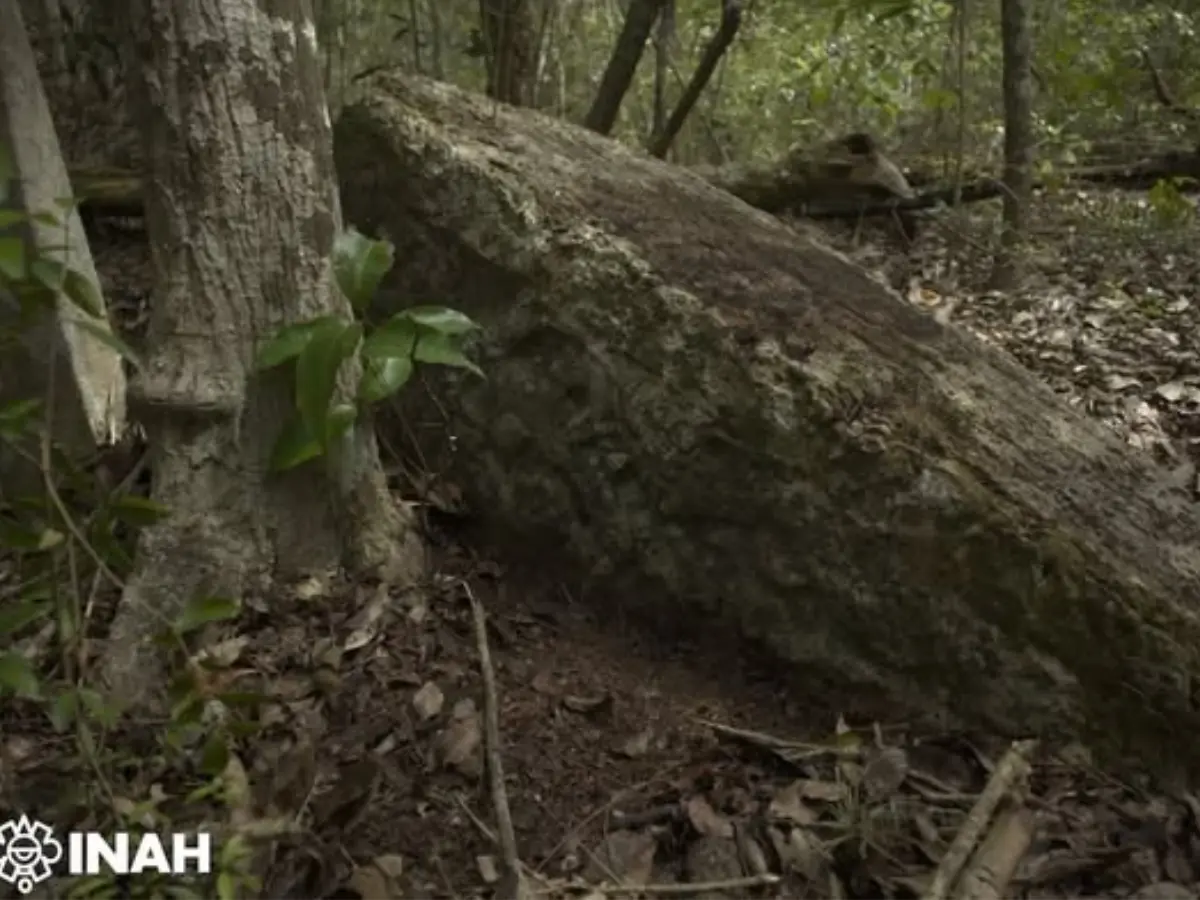
A pyramid temple was the tallest structure, which stood nearly 42 feet high, and was found in extremely good condition, a first, says Vujanović. There is also a stone monument that has legible glyphs. But they did find broken altars, with one bearing hieroglyphic text that likely dates to the late 7th century. A carved stone known as Stela 1 shows a beheading scene. Fourteen other monuments carved with symbols and hieroglyphic text were also discovered.

