Iran’s drone swarm shows adventurism that hides a diplomatic disaster for the Palestinian cause

Iran's drone swarm shows adventurism that hides a diplomatic disaster for the Palestinian cause
I don't fancy hearing about the chances of a Third World War breaking out in some random Instagram story, but that is what happened. We live in a world of frivolous predictions. But then, social media can make bad things worse. I just shrugged my shoulders and went on to Twitter-turned-X to find 'World War 3' actually trending with a hashtag.
After taking a deep breath, all I can say is that what we have just had is not the start of a new world war but one of the biggest screw-ups in diplomatic history.
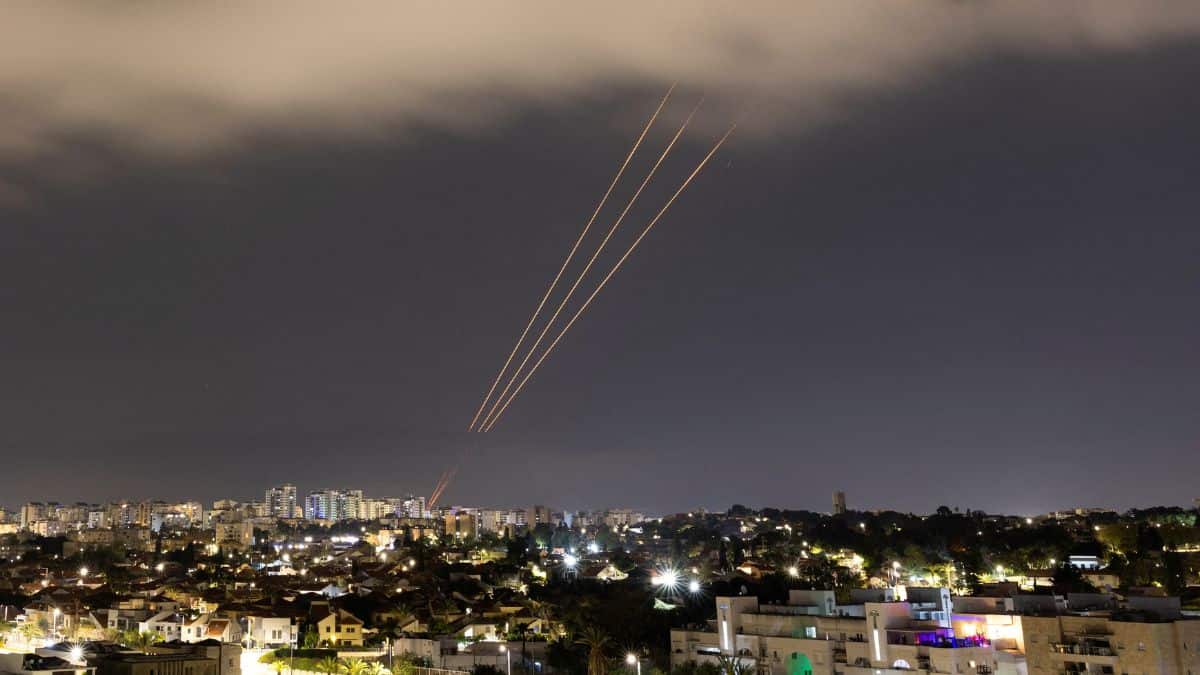
By striking an Israeli ship and then launching a swarm of drone bombs on Israeli territory, the clerics and their fellow power-wielders in Tehran may have won some headlines that speak of revenge after an Israeli attack on an Iranian diplomatic consulate building in Damascus on April 1 that killed a commander and seven officers of the Iranian Revolutionary Guard Corps (IRGC). But a simplistic retaliation is not quite an act of meaningful revenge. What we have had so far is Tel Aviv fending the drones off with its "Iron Dome" defence. Such stuff may have visual appeal for the odd video or social media memes, but we need to look deeper to see the implications and the impact of what Iran has done.

The simple fact is that for all practical purposes, Iran is ploughing a lonely furrow in trying to be the loud guardian of Palestinian people. There is no doubt that Israel's savage war against Palestinians in the aftermath of the Hamas attack on its people last October has caused an unspeakable human tragedy. The diplomatic pussyfooting by the so-called world powers in the aftermath is nothing if not a conspiracy of drift. We have not even got a real, temporary ceasefire yet while children are killed, hospitals are bombed, civilians are targeted and whole cities being razed to the ground in Gaza.
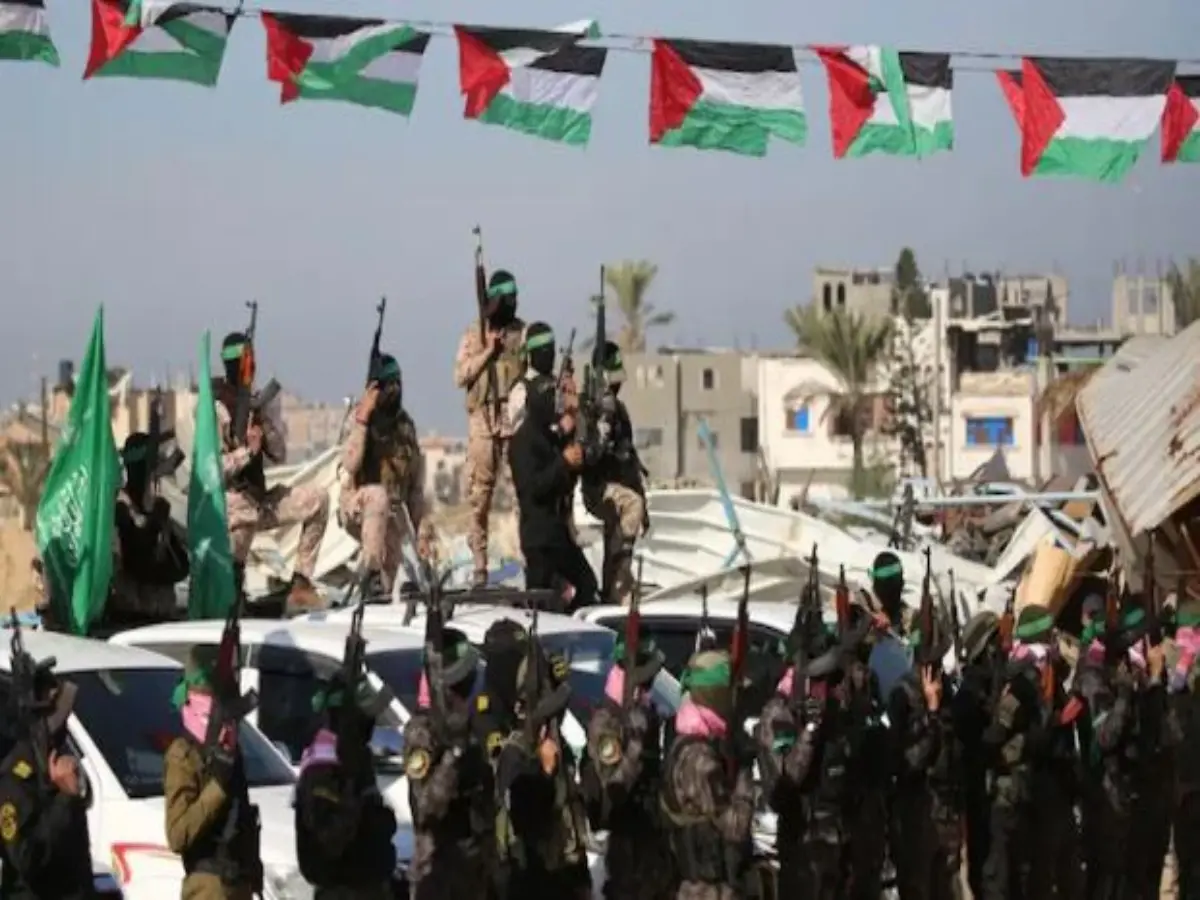
There is little doubt that Hamas has been acting in tandem with or as an agent for Iran's Shia Islamist regime. But discretion is not part of Iran's revolutionary valour. It likes to unfriend old pals and make new adversaries all the time. Since fighting a war with deposed president Saddam Hussein's Iraq in the 1980s, it has offended Saudi Arabia with its support for Houthi rebels in Yemen, and this year even launched cross-border attacks against rebels in Pakistan's Balochistan region.
Last January, Islamic State terrorists killed more than 80 people near the grave of General Qassem Soleimani on the fourth anniversary of his death in a US drone strike. Soleimani was a sworn enemy of the Sunni-Salafi-Jihadist Islamic State whose war on the Shia Islamists of Tehran is only one of the many twisted sub-plots in the Muslim world's checkered history of little and big enmities.
&imwidth=180&imheight=135&format=webp&quality=medium)
Putin conveys Iran’s proposal to Trump, offers to take Tehran’s enriched uranium
&imwidth=180&imheight=135&format=webp&quality=medium)
BTS’ RM raises privacy concerns over drones, lasers outside hotel amid Lima concert, urges fan respect
&imwidth=180&imheight=135&format=webp&quality=medium)
Barry Manilow cuts short Las Vegas comeback show, cancels next concert over Bronchitis
&imwidth=180&imheight=135&format=webp&quality=medium)
'Ouch!!! That must hurt': Kangana Ranaut hails Kamal Haasan's sharp reply to Elon Musk over Starlink row
&imwidth=180&imheight=135&format=webp&quality=medium)
'Unwarranted interference': India slams UN human rights office over remarks on Delhi protests
&im=FitAndFill=(700,400)&imwidth=180&imheight=135&format=webp&quality=medium)
Amitabh Bachchan turns 84: A look at Big B’s iconic dialogues that continue to win hearts
&imwidth=180&imheight=135&format=webp&quality=medium)
3rd T20I Preview: Another run-fest on cards as India face West Indies in Indore
&imwidth=180&imheight=135&format=webp&quality=medium)
‘Time for Ukraine to get a new president’: Trump lashes out at Zelensky over Russia strikes
&imwidth=180&imheight=135&format=webp&quality=medium)
Portugal Federation confirms Cristiano Ronaldo’s return to national team despite suspension
&imwidth=180&imheight=135&format=webp&quality=medium)
Where are Abhijeet Dipke, Ashutosh Ranka, Saurav Das? CJP gives big update after flight detention
&imwidth=180&imheight=135&format=webp&quality=medium)
Nathan Lyon completes 1,000 Test runs at No. 10 to script rare cricket feat
&imwidth=180&imheight=135&format=webp&quality=medium)
'Spent Rs 2,000 cr to elect Trump': Elon Musk bought US President's loyalty by writing the biggest political cheque in human history
&imwidth=180&imheight=135&format=webp&quality=medium)
HYBE’s Weverse Con India sets ticket sale date for March 2027 festival
&imwidth=180&imheight=135&format=webp&quality=medium)
‘Never-ending flow of cheap labour’: JD Vance hits back at Indian-origin Congresswoman over US green card curbs for major tech companies
&imwidth=180&imheight=135&format=webp&quality=medium)
Messi scores twice in Inter Miami return following final match for Argentina
&imwidth=180&imheight=135&format=webp&quality=medium)
Lula campaign accuses Meta of election interference after social media content blocked
&imwidth=180&imheight=135&format=webp&quality=medium)
Riyadh airport hit in missile attack, dozens injured; 5 in intensive care
&imwidth=180&imheight=135&format=webp&quality=medium)
US troop deaths in Iran war on rise? Pentagon reveals latest toll
&imwidth=180&imheight=135&format=webp&quality=medium)
Rahul Gandhi calls Modi, Shah ‘cowards’ amid CJP protest crackdown in Delhi
&imwidth=180&imheight=135&format=webp&quality=medium)
‘Had he known, would have been here’: CJP Chief Abhijeet Dipke denied news of grandmother's death, family claims
&imwidth=180&imheight=135&format=webp&quality=medium)
Hamas used double agents, deceived Israel to carry out October 7 massacre
&imwidth=180&imheight=135&format=webp&quality=medium)
Nicolas Cage refuses AI waiver for Spider-Noir, hints at Amazon exit and True Detective role
&imwidth=180&imheight=135&format=webp&quality=medium)
Bigg Boss 20: Who is Manish Goel? Meet the new wild card contestant on Salman Khan’s show
&imwidth=180&imheight=135&format=webp&quality=medium)
'Jantar Mantar not the story of India': BJP's Sambit Patra claims 'anarchists' tried to hold Delhi captive
&imwidth=180&imheight=135&format=webp&quality=medium)
100,000 strikes in 3 years: How October 7 redefined Israel's war
&im=FitAndFill=(700,400)&imwidth=180&imheight=135&format=webp&quality=medium)
Food shortages, suicide attempts and more: USS Abraham Lincoln returns to US after 321 day deployment — What happened aboard the US carrier?
&im=FitAndFill=(700,400)&imwidth=180&imheight=135&format=webp&quality=medium)
Amitabh Bachchan @ 84: A look at his most iconic on-screen avatars - Anthony Gonsalves, Vijay Kumar and more
&imwidth=180&imheight=135&format=webp&quality=medium)
CJP's Abhijeet Dipke, Ashutosh Ranka, Saurav Das released 22 hours after flight detention
&imwidth=180&imheight=135&format=webp&quality=medium)
‘Your people don’t even let us near it’: IAF chief’s blunt response on US F-35; India yet to decide on Russia’s Su-57
&imwidth=180&imheight=135&format=webp&quality=medium)
Powerful 7.7 magnitude earthquake strikes Panama, tsunami warning issued
&imwidth=180&imheight=135&format=webp&quality=medium)
Saudi Arabia's King Khalid International Airport attack kills 12, injures 309; India calls it 'unacceptable'
&imwidth=180&imheight=135&format=webp&quality=medium)
Delhi Police arrest 4 men seen in viral video allegedly assaulting women protesters during CJP protest
&imwidth=180&imheight=135&format=webp&quality=medium)
US mid-term elections: What are PACs - Unique American System that lets corporates shape voting
&imwidth=180&imheight=135&format=webp&quality=medium)
Thai queen becomes first reigning monarch to fly jet solothailand #queen #wion
&imwidth=180&imheight=135&format=webp&quality=medium)
Kim Kardashian brings glamour to Singapore Grand Prix while supporting boyfriend Lewis Hamilton
The best thing going for Iran so far (if one might call it that) is that China and Russia love anybody doing anti-US acts and therefore keep their diplomatic silence loud. But that is hardly what the doctor ordered for suffering Palestinians, whose basic survival is at stake. All talk of a two-state solution that would help the rise of a Palestinian state is but a desert mirage, an elusive dream and a theoretical prospect best left to television studio panels.
The ground reality suggests that Iran has only worsened the case for Palestinians. I am tempted to compare Israel's Damascus attack as one resembling the 26/11 attacks on Mumbai by Pakistan-based terrorists in 2008. What India did after that was not a simplistic military retaliation but an elaborate diplomatic counter-offensive. Armed with dossiers and evidence, it built up a case for Pakistan as a state that harbours terrorists. It won sympathy and diplomatic support across the world of a lasting kind that isolated Islamabad.
Iran, on the other hand, prefers primitive retaliation. I know that in normal diplomacy, tit-for-tat acts are considered in the league of expected military responses. But what we have in the asymmetry of power in West Asia is a complex grid of relationships that make simplistic acts of revenge futile at best, and disastrous at worst.
Just when the whole world was coming around to a broad consensus on restraining Israel, we have the prospect (indeed, a reality) of Israel gaining diplomatic legitimacy all over again. Tehran has to take the blame for this.
The mysterious death in 2022 of 22-year-old woman activist Mahsa Amini, targeted by Iran's religious morality police, is still fresh in the minds of the world. Whether it is events at home or its abrasive behaviour within the Muslim world, Iran is a difficult customer for any diplomatic exercise. It has enough adversaries within the Muslim world not to be seen as a power of any consequence in the world order.
In such a backdrop, what we are staring into is a scenario in which the US is standing up for Israel all over again, aided by its rich Western allies. US President Joe Biden, facing elections in a country famous for its wealthy Jewish lobby, said on Friday: "We are devoted to the defense of Israel, we will support Israel, we will help defend Israel, and Iran will not succeed."
So, who is the winner? Certainly not Iran. The drone attacks in retaliation for the Damascus hit can only be seen as a shaky act of bravado that has caused a diplomatic mess. That is bad news getting worse for Palestinians.
I don't see a Third World War. What I see is a human tragedy worsened by the diplomatic immaturity of a dubious friend of the Palestinian cause.
