India's AI problem: Funding gap for AI startups, research and development is the core constraint

&imwidth=600&imheight=450&format=webp&quality=medium "India's AI problem: Funding gap for AI startups, research and development is the core constraint")
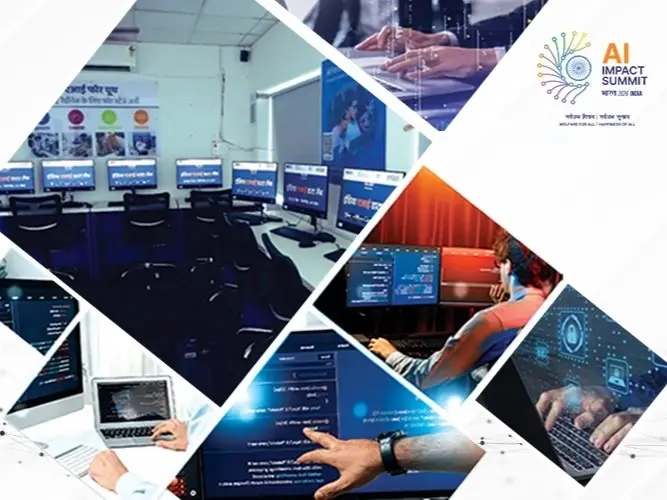
An image from India AI Mission website, promoting artificial intelligence in the country Photograph: (Others)
India's AI progress has been constrained by low R&D spending and limited startup funding. The IndiaAI Mission and sovereign AI model efforts signal a significant shift in direction. Here is a status report
"Did India miss the AI bus?" This is a frequently asked question at recent artificial intelligence-related events in India. Clearly, the progress has been slow. But what is the reason? The answer may lie in how low, and slow, the investment has been in AI startups, foundational AI model development, and research and development (R&D). Here is a status report:
India's research and development funding gap
India's gross expenditure on research and development (GERD) is around 0.64 per cent of GDP. This is below the global average and far behind China, at around 2.6 per cent, and the US, at around 3.6 per cent, according to the Lowy Institute. Private industry funds only about 36 per cent of total R&D in India, compared with more than 70 per cent in the US, China and South Korea, according to a Carnegie Endowment for International Peace analysis. It also noted that India trails the two top AI leader nations in AI patents granted, reflecting not only a spending gap but also a quality gap.
Investment in AI startups in India reveals a capital chasm
Indian AI startups raised $643 million across 100 deals in 2025, up just 4.1 per cent, while AI funding in US startups surged 141 per cent to $121 billion across 765 rounds, according to Tracxn data reported by TechCrunch. Indian capital largely favoured application-led firms over capital-intensive foundational model developers. Investors attribute this to India's lack of large foundational AI model companies and the time required to build research depth, talent pipelines and patient capital.
Trending Stories
&imwidth=280&imheight=210&format=webp&quality=medium)
&imwidth=280&imheight=210&format=webp&quality=medium)
&imwidth=280&imheight=210&format=webp&quality=medium)
&imwidth=280&imheight=210&format=webp&quality=medium)
&im=FitAndFill=(700,400)&imwidth=280&imheight=210&format=webp&quality=medium)
&imwidth=280&imheight=210&format=webp&quality=medium)
&imwidth=280&imheight=210&format=webp&quality=medium)
&imwidth=280&imheight=210&format=webp&quality=medium)
&imwidth=280&imheight=210&format=webp&quality=medium)
&im=FitAndFill=(700,400)&imwidth=280&imheight=210&format=webp&quality=medium)
&imwidth=280&imheight=210&format=webp&quality=medium)
&imwidth=280&imheight=210&format=webp&quality=medium)
&imwidth=280&imheight=210&format=webp&quality=medium)
&imwidth=280&imheight=210&format=webp&quality=medium)
&imwidth=280&imheight=210&format=webp&quality=medium)
&imwidth=280&imheight=210&format=webp&quality=medium)
&im=FitAndFill=(700,400)&imwidth=280&imheight=210&format=webp&quality=medium)
&im=FitAndFill=(700,400)&imwidth=280&imheight=210&format=webp&quality=medium)
&imwidth=280&imheight=210&format=webp&quality=medium)
&imwidth=280&imheight=210&format=webp&quality=medium)
&imwidth=280&imheight=210&format=webp&quality=medium)
&imwidth=280&imheight=210&format=webp&quality=medium)
&imwidth=280&imheight=210&format=webp&quality=medium)
&imwidth=280&imheight=210&format=webp&quality=medium)
&imwidth=280&imheight=210&format=webp&quality=medium)
&im=FitAndFill=(700,400)&imwidth=280&imheight=210&format=webp&quality=medium)
&imwidth=280&imheight=210&format=webp&quality=medium)
&imwidth=280&imheight=210&format=webp&quality=medium)
&imwidth=280&imheight=210&format=webp&quality=medium)
&imwidth=280&imheight=210&format=webp&quality=medium)
&imwidth=280&imheight=210&format=webp&quality=medium)
&imwidth=280&imheight=210&format=webp&quality=medium)
&imwidth=280&imheight=210&format=webp&quality=medium)
&imwidth=280&imheight=210&format=webp&quality=medium)
However, there has been a sharp upturn in 2026. Indian AI startups raised $3.94 billion in the first quarter of this year alone, more than six times the full-year 2025 total. This was led by Neysa's $600 million funding round and the momentum generated by the AI Impact Summit hosted by India, according to Analytics Insight.
New Delhi has reinforced this shift with a $1.15 billion Fund of Funds and a Rs 1 trillion ($12 billion) Research, Development and Innovation scheme spanning AI, quantum computing and deep-tech technologies, as reported by TechCrunch.
Much of this remains at the policy announcement and reporting stage, so its long-term durability remains to be seen. However, it is fair to say that the direction has clearly reversed.
Research output: China leads, India climbs slowly
China dominates high-impact research, with the Australian Strategic Policy Institute's (ASPI) Critical Technology Tracker, published in December 2025, showing China leading in 66 of 74 critical technologies like AI. India is slowly climbing up, having ranked 50th, up from 43rd a year earlier. India's weakness is concentrated in compute infrastructure and frontier AI model categories that matter most, rather than in the breadth of its research base.
Foundational AI: India's sovereign model bet
India's foundational AI model push has been stuck in the planning stage for years, but is now moving towards execution. Sarvam AI was selected under the IndiaAI Mission in April 2025 to build the country's first sovereign large language model (LLM) ecosystem. Sarvam's original mandate was to build a 120-billion-parameter model. It released two open-source models in early 2026, Sarvam-30B and Sarvam-105B, under the Apache 2.0 licence on Hugging Face and AIKosh. Both are mixture-of-experts (MoE) reasoning models trained from scratch using government-supported compute infrastructure. A separate awardee, Soket AI, retains the original 120-billion-parameter model mandate.
Also read: Forget building AI, India is yet to build its first fully indigenous computer or mobile phone
These should be viewed alongside the limitations. Sarvam's models were trained on a few thousand graphics processing units (GPUs) over several months, far below the cluster-months of more than 10,000 GPUs typically required for frontier-scale AI training. In addition, all sovereign model training continues to rely on imported NVIDIA chips, highlighting India's dependence on foreign semiconductor hardware. While India has now demonstrated that it can build and release competitive open-source AI models, closing the capability gap in frontier-scale AI systems remains the more difficult challenge.