China's Demographic Challenge: Ageing population threatens economic shift & growth

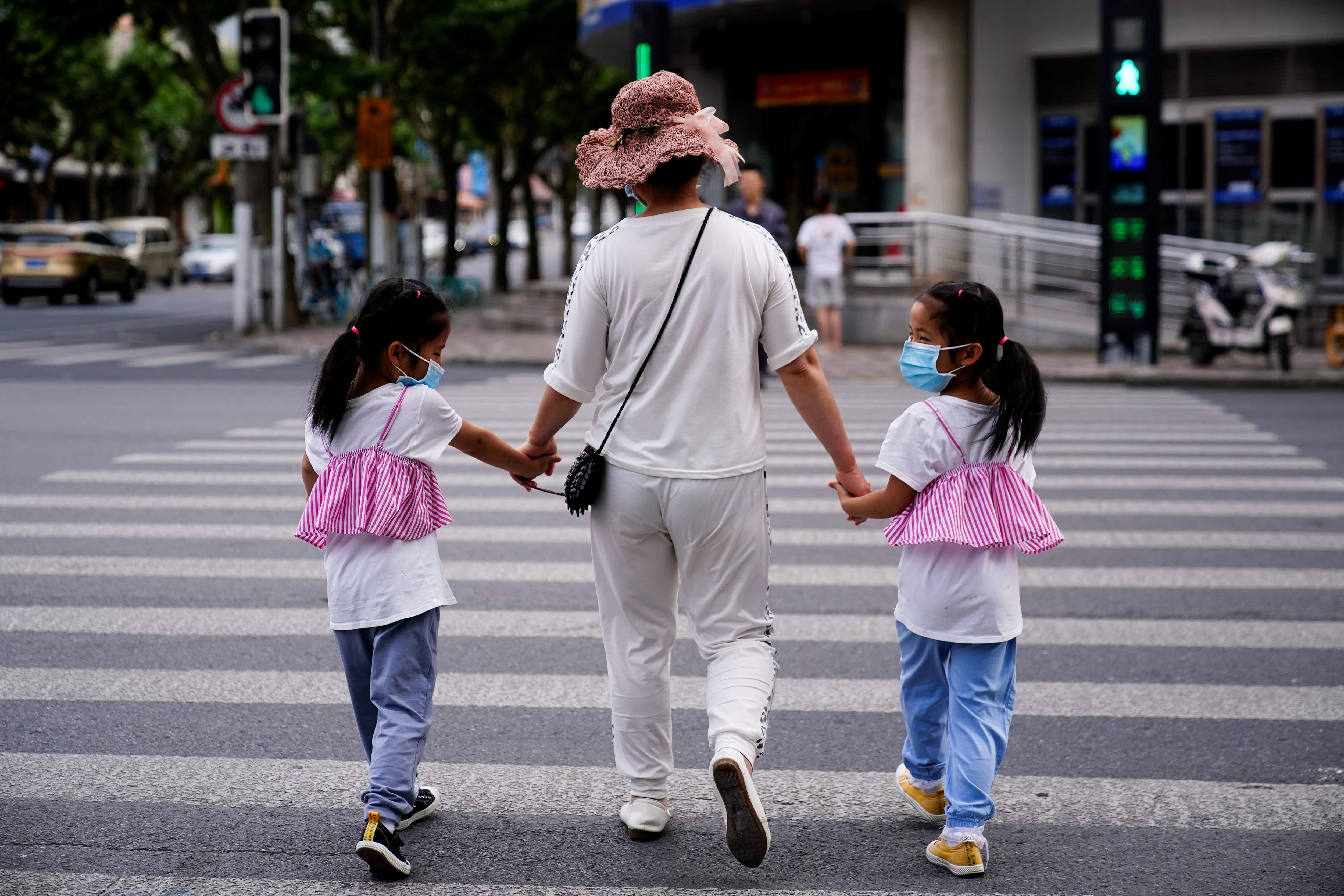
A mother walks with her twin daughters on a street in Shanghai, China
China faces a formidable economic challenge as its ageing population threatens key policy goals, including boosting domestic consumption and tackling growing debt.
According to Reuters, a record low birth rate in 2023 and the impact of COVID-19 deaths have resulted in a second consecutive year of population decline, raising concerns about the country's long-term growth prospects.
The decline in the working-age population will exacerbate structural imbalances, impacting household consumption and straining pension and elderly care systems. This situation poses a significant hurdle to China's economic objectives for the coming decade.

China's household consumption already constitutes one of the lowest proportions of economic output globally. Policymakers are grappling with the prospect of large segments of the population exiting the labour pool, entering retirement, and surpassing a prime period for consumption.
About 300 million people, the country's largest demographic group aged 50 to 60, equivalent to the entire US population, are expected to leave the workforce in the next decade.
This comes at a time when pension budgets are already stretched, with the Chinese Academy of Sciences predicting the pension system running out of money by 2035.
)
‘I have a big decision coming up’: Trump says he’s approaching major ‘crossroad’ in Iran war
)
Abhishek Sharma shatters record with 30-ball century against Afghanistan
)
India seeks to build a full semiconductor supply chain
)
US intel warns China can steal F-35 jets secret from Saudis
)
Former India player Diana Edulji wants Smriti Mandhana to replace Harman as skipper at the earliest
)
Pak defence minister says 'time has come to implement pact'
)
Formula One reveals the 2027 race calendar; Monaco to host sprint race for the first time
&im=FitAndFill=(700,400))
Meet top 5 batters in the latest ICC T20I Rankings
)
All Indian goods to get duty-free access to New Zealand
)
AI already defying, denying humans, is it beyond human control already?
)
240-million-year-old bizarre 'pig with a tusk' creature creates new dilemma over origin of dinosaurs
)
US to sell 48 F-35 Lightning fighter jets to Saudi Arabia, help it deter threats
)
Hong Kong unveils 11 new measures to boost birth rates, offers higher cash bonuses and housing perks
)
Former OpenAI researcher warns of growing risks from Artificial Intelligence
)
Tata Trusts chairman Noel Tata calls Chandrasekaran’s reappointment ‘illegal’, rejects Tata Sons listing
)
Dolly Parton dies at 80: Country legend’s team reveals cause of death
)
Hong Kong extends newborn cash support scheme by three years
)
Fed raises rates for first time in 3 years, Kevin Warsh defies Trump as inflation mounts
)
US drone firm linked to Trump’s sons signs MoU with Pakistan army, gets initial order
)
Pak batter Rizwan's petition against being questioned by cyber crime agency rejected by court
)
Daayra movie review: Kareena Kapoor, Prithviraj Sukumaran shine in Meghna Gulzar’s cop-versus-cop crime thriller
)
Trump could impose tariffs of up to 100%
)
Want to get married within a year? Why 18 lakh people rush to Jaipur for ‘sacred henna’
&im=FitAndFill=(700,400))
Suriya and Jyothika say ‘I do’ again after 20 years! See their dreamy wedding pics
)
Laura Wolvaardt sets new world record for most WT20I runs in a year
)
Mahua Moitra moves UN over alleged exclusion of Muslim officers from Amit Shah events
)
Pezeshkian, Araghchi set to attend UNGA 2026 in New York amid ongoing conflict as US-imposed travel curbs remain
)
Ukraine plans record $109 bn defence spending, nearly two thirds of budget amid Russia war
China's retirement age, among the world's lowest, raises concerns about the financial preparedness of those entering retirement. People are expressing worries about relying solely on pension income.
As China experiences rapid urbanisation, traditional expectations of children financially supporting aging parents are shifting. The demographic shift will reduce the ratio of workers supporting retirees, intensifying China's pension crisis. Demographers warn that by 2050, this crisis could become a humanitarian catastrophe.
The ageing population not only affects the pension system but also has broader economic implications. China's second-largest demographic group, aged 30 to 49, currently in a prime consumption period, is expected to participate less in domestic consumption as they age.
The subsequent generation, in their 20s, is the smallest since the 1950s due to China's one-child policy. This demographic trend poses challenges to sectors like real estate, which accounted for a significant portion of China's economic output.
As demand for housing declines, China's reliance on exports may increase, affecting innovation and productivity improvement.
(With inputs from Reuters)