

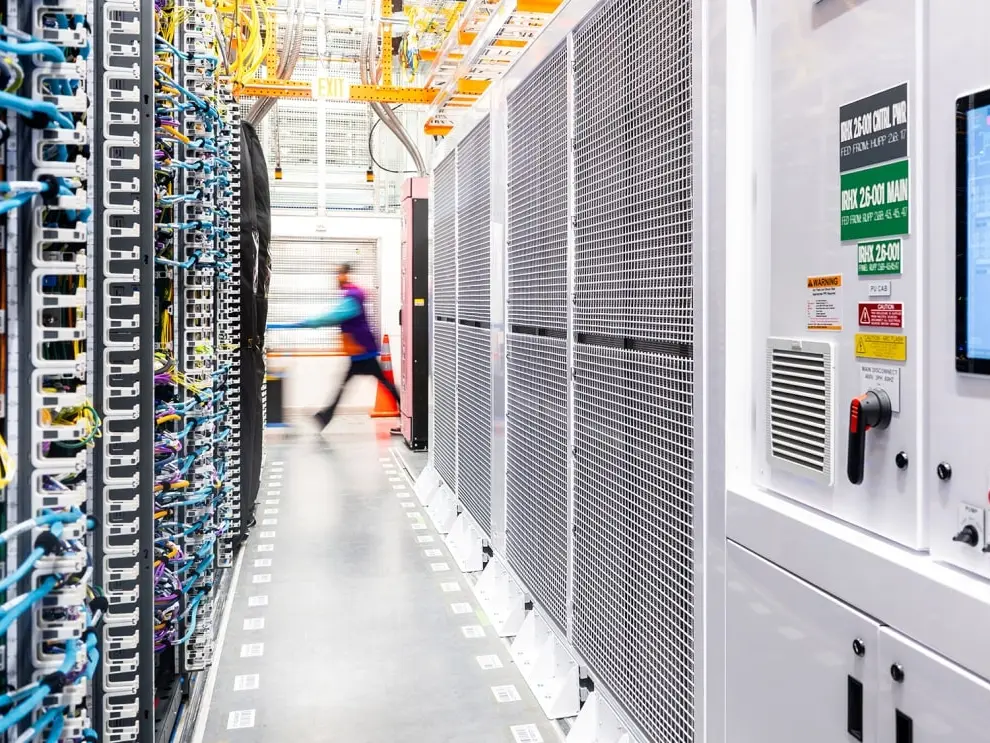
&imwidth=800&imheight=600&format=webp&quality=medium "Amazon to invest $13 billion in Australian data centres and AI infrastructure")
Amazon Web Services (AWS), a subsidiary of Amazon.com Inc., has announced a massive AU$20 billion ($13 billion) investment plan to expand, operate, and maintain its data centre infrastructure across Australia between 2025 and 2029.
This marks the largest-ever technology investment in the country by a global firm, aimed at supporting Australia's growing demand for cloud computing and artificial intelligence (AI) capabilities.
The investment is expected to accelerate AI adoption and help modernise businesses across sectors while aligning with the Australian government’s vision to drive productivity and economic growth through innovation.
Powering AI transformation
AWS’s expanded infrastructure will offer advanced cloud and generative AI tools to hundreds of thousands of Australian customers and partners. The company says its new data centre investment will help organisations harness the power of AI and support compute-heavy workloads with local data residency and regulatory compliance.
“AI is a once-in-a-generation transformation, and Amazon is pleased to be empowering all Australians to innovate at scale through this investment,” said AWS CEO Matt Garman.
Trending Stories
&imwidth=180&imheight=135&format=webp&quality=medium)
Putin seeks Trump-Xi summit on Ukraine war, proposes talks alongside APEC: Report
&imwidth=180&imheight=135&format=webp&quality=medium)
Brendan Taylor overtakes Andy Flower to become Zimbabwe’s leading ODI run-scorer
&imwidth=180&imheight=135&format=webp&quality=medium)
Anthropic’s public benefit plan: What its 5% share commitment means for AI’s future
&imwidth=180&imheight=135&format=webp&quality=medium)
Nobel laureate Machado, who dedicated prize to Trump, confirmed as Venezuela opposition leader
&imwidth=180&imheight=135&format=webp&quality=medium)
Bessent accuses Europe of refusing secondary tariffs on India, China
&imwidth=180&imheight=135&format=webp&quality=medium)
Iran says Hormuz reopening plan remains on table as Trump predicts quick war end
&imwidth=180&imheight=135&format=webp&quality=medium)
WATCH | Flames engulf St Petersburg oil sites as Ukraine launches 1,000 drones at Russia
&imwidth=180&imheight=135&format=webp&quality=medium)
Lawrence Bishnoi gang claims responsibility for firing at Tiger Shroff over ties to Salman Khan
&imwidth=180&imheight=135&format=webp&quality=medium)
Flying car race: Alef Aeronautics welcomes Tesla Roadster '11 years' later, but are the two models the same?
&imwidth=180&imheight=135&format=webp&quality=medium)
India moves to buy 10,000 more AI chips for a national compute pool open to startups
&imwidth=180&imheight=135&format=webp&quality=medium)
MI5 is opening an AI threat centre, and OpenAI just told MPs the worst isn't over
&im=FitAndFill=(700,400)&imwidth=180&imheight=135&format=webp&quality=medium)
Tesla Roadster engineering: The hidden hardware behind its flying demonstration
&imwidth=180&imheight=135&format=webp&quality=medium)
Elon Musk features on Lucknow's 'anti-India' Ravan poster alongside Rahul Gandhi, Akhilesh
&imwidth=180&imheight=135&format=webp&quality=medium)
China responds to Trump's Press Secretary Katie Zacharia after toilet remark: 'Visit China more often'
&imwidth=180&imheight=135&format=webp&quality=medium)
Cattle-feed bran in biscuits, detergent in milk: FSSAI acts against 3 companies
&imwidth=180&imheight=135&format=webp&quality=medium)
'Those who have destroyed must pay': Macron says France feels 'anger and shame' over protest violence
&im=FitAndFill=(700,400)&imwidth=180&imheight=135&format=webp&quality=medium)
5 technologies that could make the Tesla Roadster one of the most unusual cars ever built
&imwidth=180&imheight=135&format=webp&quality=medium)
Tel Aviv-Vienna flight makes emergency landing after bomb threat; Bulgarian Air Force scrambles MiG-29 fighter jet
&imwidth=180&imheight=135&format=webp&quality=medium)
No Kings' Instagram suspended during early-voting campaign
&imwidth=180&imheight=135&format=webp&quality=medium)
Tiger Shroff shows injuries after Juhu firing incident; Eknath Shinde says Mumbai won’t tolerate gang wars
&imwidth=180&imheight=135&format=webp&quality=medium)
'It's a joy to see the makers bring it on such a grand scale': SS Rajamouli on Ramayana
&imwidth=180&imheight=135&format=webp&quality=medium)
JD Vance admits H-1B rhetoric was ‘imperfect’ after immigrant challenges him
&imwidth=180&imheight=135&format=webp&quality=medium)
US to review Russia sanctions waiver within 60 days as Rubio cites India’s ‘substantial’ Russian energy imports
&imwidth=180&imheight=135&format=webp&quality=medium)
UAE agrees with Saudi Arabia to rejoin Yemen fight as Houthi strikes rattle Riyadh
&imwidth=180&imheight=135&format=webp&quality=medium)
'We are not sitting in ivory towers, we are aware': SC issues notice to Rahul Gandhi, Akhilesh Yadav
&imwidth=180&imheight=135&format=webp&quality=medium)
NFl 2026/27 - Saints vs Steelers to go ahead in Paris next week despite protest
&imwidth=180&imheight=135&format=webp&quality=medium)
‘My president, I mean my husband’: Trump's new press secretary Katie Zacharia's first briefing goes off the rails in 14 minutes
&imwidth=180&imheight=135&format=webp&quality=medium)
WATCH | iPhones, luxury perfumes floating in Hormuz? Iranian fishermen make bizarre discovery
&imwidth=180&imheight=135&format=webp&quality=medium)
'We feel like Mr India': Gujarat’s undercover SHE team guard garba nights at Navratri
&imwidth=180&imheight=135&format=webp&quality=medium)
2.5 lakh cap, 4-passenger limit: What is Delhi's new e-rickshaw draft policy
&imwidth=180&imheight=135&format=webp&quality=medium)
Tiger Shroff attacked by three gunmen in Mumbai, actor safe, two injured
&imwidth=180&imheight=135&format=webp&quality=medium)
Lizard people? Ex-US Army sniper claims soldier killed by 'reptilian beings' in battle near Area 51
&imwidth=180&imheight=135&format=webp&quality=medium)
After Kennedy Center and reflecting pool disputes, Trump turns to Washington golf course plan amid legal battle
&imwidth=180&imheight=135&format=webp&quality=medium)
Anirudh Ravichander-Kavya Maran wedding: Telangana CM reveals Chennai reception date
&imwidth=180&imheight=135&format=webp&quality=medium)
Why France looks the most fragile in the G7 amid protests and budget deadlock
According to the Department of Industry, Science and Resources, AI and automation could add up to AU$600 billion ($388 billion) annually to Australia’s GDP by 2030.
Building on a decade of commitment
AWS has been operating in Australia since 2012, with the launch of its Asia Pacific (Sydney) region. Over the years, it has expanded with the Asia Pacific (Melbourne) region and local zones in Perth. The company also introduced Amazon Bedrock, its fully managed generative AI service, in Sydney in 2024.
A major milestone came when AWS partnered with the Australian government to create a “top secret” AWS Cloud for national security and defence.
Prime Minister Anthony Albanese praised the announcement, stating, “This is exactly the kind of economic investment we want to see. It will create skilled jobs, infrastructure for complex AI applications, and opportunity for innovation and growth.”
Backing growth with clean energy
To power its expanding infrastructure, Amazon is investing in three new solar farms in Victoria and Queensland. Operated by European Energy, these farms will supply more than 170 megawatts (MW) of renewable energy. The projects add to Amazon’s existing portfolio of eight wind and solar farms across the country.
Once operational, all 11 projects are projected to generate over 1.4 million megawatt-hours of carbon-free energy annually, which is enough to power approximately 290,000 Australian homes.
AWS's cloud services are also more energy-efficient. A study by Accenture found migrating AI workloads to AWS can cut carbon emissions by up to 94 per cent compared to on-premises data centres.
Training Australians for the AI future
Alongside infrastructure expansion, AWS is doubling down on AI skills training through its AI Spring Australia initiative. The programme includes the AWS Generative AI Accelerator for startups and AI Launchpad for enterprises. The company has trained over 400,000 Australians since 2017 and aims to equip many more with AI and cloud expertise.
Programs such as Amazon’s AI Ready and Work-Based Learning Program are designed to prepare Australians for future tech roles.
This investment in Australia follows similar major commitments from Amazon in the US, including $20 billion in Pennsylvania, $10 billion in North Carolina, and $5 billion in Taiwan. These projects are part of a broader race among tech giants like Amazon, Microsoft, and Google to dominate the generative AI and cloud infrastructure space.